
You have finally launched your new brand identity. Your logo feels unmistakably yours, your colour palette captures the right mood and your typography gives the whole thing a voice before you have written a single word.
Everything fits together beautifully.
Then the everyday work begins.
You need an Instagram post by tomorrow. A photographer sends over a new collection of images. You open a proposal template you have used for three years. Someone on your team needs the logo, but they are not sure which version to choose.
And slowly, almost invisibly, a different font appears here. An almost-right shade appears there. A photograph looks lovely but belongs to a completely different visual world. None of these choices seems particularly dramatic on its own but together, they can begin to soften the clarity of your new identity.
Brand consistency is not about making every piece of content identical. It is about creating a recognisable thread through everything your audience sees, reads and experiences. Your brand can still evolve, experiment and have a little fun; it simply needs to feel as though every new idea belongs to the same story.
So, how can you stay consistent with your new brand identity once it leaves your designer’s hands and becomes part of your everyday business? Let’s look at five practical ways to protect the details that make it yours.
📝 1. Follow the little rules in your brand guidelines
Your brand guidelines are not only there to tell you which logo to use.
They may include your exact colour codes, primary and secondary fonts, typography hierarchy, logo spacing, approved logo variations and guidance on how different visual elements work together. They might even specify whether your headings should appear in uppercase, lowercase or sentence case.
These choices can feel tiny. Surely using a slightly different green or switching an uppercase heading to lowercase cannot change the whole brand?
One small variation probably will not. But brand inconsistency rarely arrives as one enormous, dramatic mistake. It gathers through dozens of tiny decisions that gradually pull the identity in different directions.
Imagine your brand guidelines specify bold uppercase headings because they create a confident, editorial feeling. If you regularly replace them with soft lowercase type, the words are still readable but some of the intended personality disappears. The same applies when you use a font that looks nearly like the approved one or choose a colour by eye rather than using its exact code.
The little rules are not arbitrary restrictions. They are the ingredients that help your audience recognise your brand, even when your logo is nowhere in sight.
A simple habit: keep your brand guidelines somewhere easy to reach and save your colour codes, fonts and approved logo files in one clearly labelled folder. The easier the correct choice is to find, the more likely you are to use it.
🌟 2. Make every template feel like your brand
Canva templates can be incredibly helpful, especially when you need to create content quickly and do not want to begin with a completely blank page. But a template is only the starting point.
Changing the original beige to something vaguely similar to your brand colour does not automatically make the design part of your visual identity. The typography, spacing, image treatment, shapes, icons and overall composition may still communicate a completely different personality.
Before using an existing template, ask:
Are these my exact brand colours?
Am I using my approved fonts and text hierarchy?
Does the layout reflect the feeling of my identity?
Do the imagery and graphic elements belong to my visual world?
Could someone recognise this as mine without seeing the logo?
You do not need to create every social post from scratch. In fact, a small set of repeatable, custom templates can make consistency much easier.
For example, you might have one template for educational carousels, one for testimonials, one for project reveals and a few flexible Instagram Story layouts. Each design can still change with the content, while the underlying typography, colours and graphic language keep everything connected.
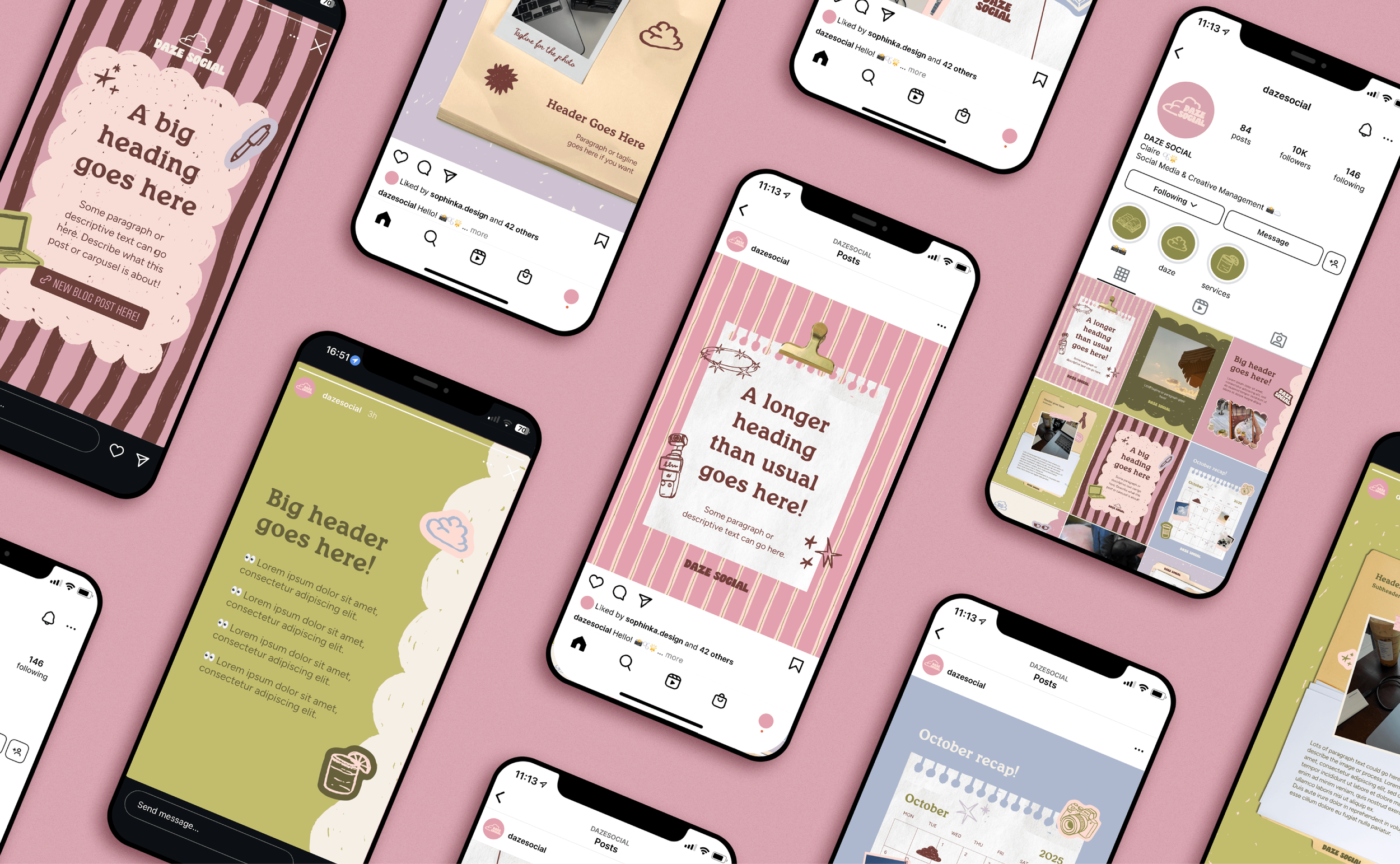
This is why I also create custom social media templates alongside brand identities. They translate the larger identity into practical, everyday tools—so you are not left staring at a beautiful set of brand guidelines and wondering how on earth they become Tuesday’s Instagram post.
Consistency should support your creativity, not make content creation feel like an exam you forgot to revise for.
📸 3. Choose imagery from the same visual world
A photograph can be beautiful and still be completely wrong for your brand.
Perhaps your identity feels warm, tactile and nostalgic, but the image you have chosen is cool-toned, glossy and ultra-minimal. Perhaps your brand is bright and playful, while your photographs are dark and serious. The subject might be relevant, but the feeling tells a different story.
When choosing brand photography or stock imagery, look beyond what appears in the photograph. Pay attention to:
lighting
colour temperature
composition
contrast
texture
setting
styling
the emotions the image creates
Editing matters, too. A consistent crop, colour treatment or subtle preset can help photographs from different sources feel more connected. This does not mean every image needs the same pose, background or exact composition—your audience does not need to see one photograph wearing twenty different hats.
The goal is simply for the imagery to feel as though it belongs in the same visual world.
Your brand guidelines may already include art direction, example photographs or notes about what to look for and avoid. Use these as a filter before adding a new image. If it is beautiful but feels like it wandered in from someone else’s brand, it may not be the right choice.

👀 4. Look beyond your Instagram grid
It is easy to think about brand consistency mainly in relation to social media because that is where many businesses create visual content most frequently.
But your brand lives in far more places than your Instagram feed.
Think about the full journey someone might take with your business:
They discover a post, visit your website, fill in an inquiry form, receive an email, open your proposal, pay an invoice and eventually receive a welcome guide, product or piece of packaging.
Every one of those moments contributes to their experience of your brand.
They do not all need the same amount of decoration. Your invoice does not need to arrive dressed for the Met Gala. But the logo version, colours, typography, imagery and tone of voice should still feel connected.
Take a little tour through your own customer journey and check:
Does your email signature use the correct logo and colours?
Do your proposals and presentation decks match your current identity?
Are old fonts still hiding in your forms or PDF documents?
Does your newsletter feel connected to your website and social content?
Are your packaging, printed materials and digital touchpoints telling the same story?
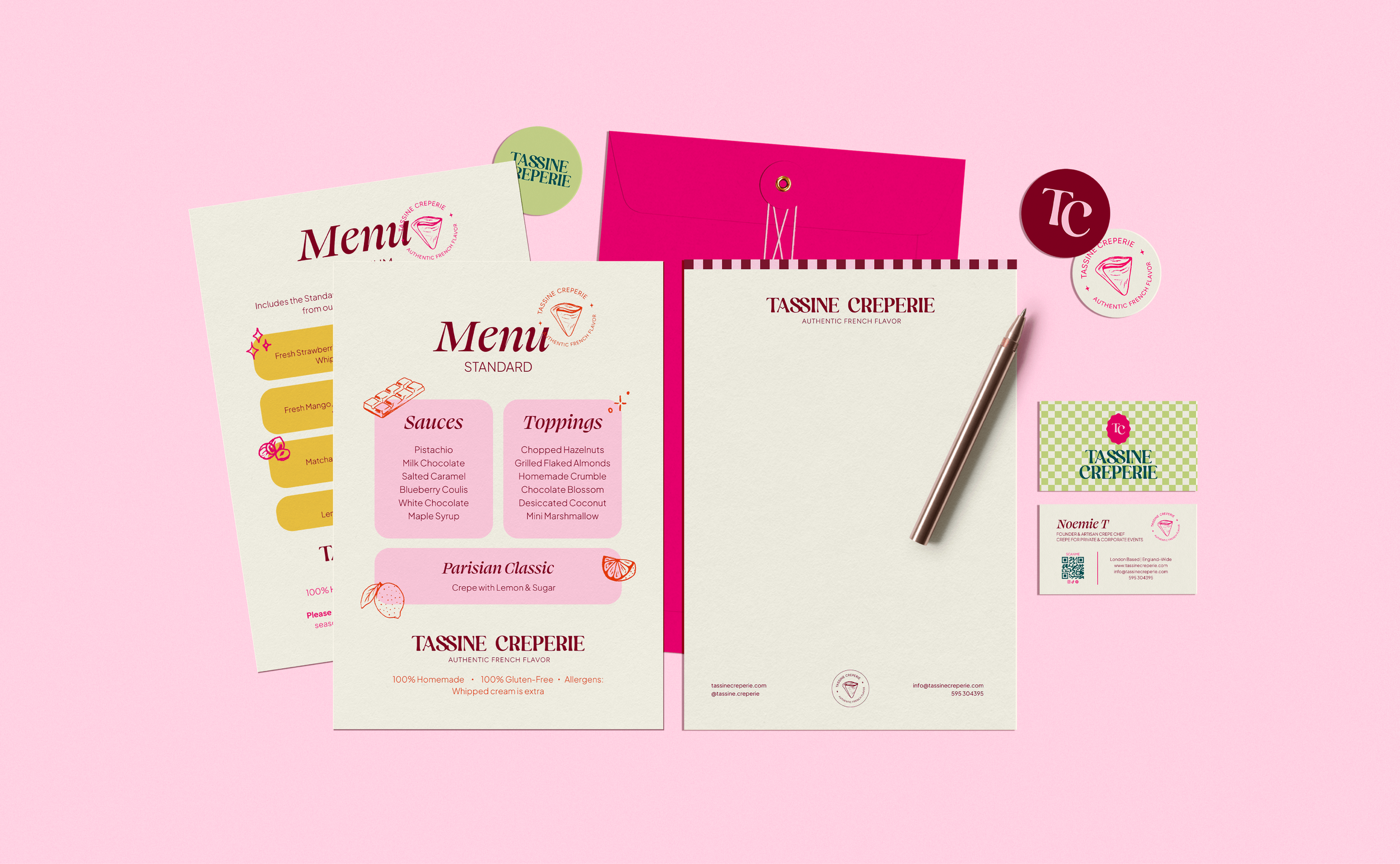
This is often where the smallest updates create the most polished result. A consistent brand experience tells your audience that care has been taken—not only in the visible, photogenic moments, but in every quiet corner of the business.
🌎 5. Bring your collaborators into your brand world
As your business grows, you may no longer be the only person creating things for your brand.
A virtual assistant might design Instagram Stories. A copywriter may work on your website. A photographer could plan your next shoot. A social media manager might schedule content, while a printer or developer prepares the final output.
Each person is helping shape how your audience experiences the brand, so give them the same map before they begin.
Share your:
brand guidelines
approved logo files
colour codes
font files or font names
photography direction
graphic elements and illustrations
social media templates
tone-of-voice notes
Do not assume someone will automatically know which logo variation to use or what “warm but still professional” looks like for your particular business. A clear creative brief, supported by your guidelines and a few examples, saves time and reduces the need for corrections later.
It is also worth removing outdated assets from shared folders. If both the old and new logo are labelled “final”, you are essentially setting up a tiny obstacle course and hoping everyone reaches the right file.
Brand consistency becomes much easier when the whole team can make confident decisions without guessing.
💖 Brand consistency does not mean making everything identical
There is a difference between consistency and repetition.
Consistency means using a familiar set of ingredients. Repetition means serving the exact same meal every day—and no one is asking your brand to do that.
You can introduce new layouts, try different content formats and respond to seasons or campaigns while keeping the identity intact. Your typography, colour palette, image direction, graphic language and tone of voice create the recognisable foundation. Within that framework, there should still be room to play.
In fact, a thoughtful brand identity should give you more creative freedom because you are no longer making every decision from scratch. You know the world you are creating within. You know what belongs there. And you can experiment without losing the thread.

Your brand identity is designed to be used
A new identity is not meant to remain perfectly preserved in a presentation. It should stretch across real content, real client touchpoints and all the slightly chaotic realities of running a business.
The aim is not absolute perfection. It is intention.
Follow the small rules. Create practical templates. Curate your imagery. Look beyond social media. Give collaborators the tools they need. These habits protect the strategy behind your identity and help every part of your business feel connected, considered and recognisably yours.
Because it really is in the details.
✨ Ready for a brand identity you can use confidently?
My brand identity packages give you more than a collection of beautiful visual elements. Together, we create a thoughtful system rooted in your story, strategy and audience—along with clear guidance for carrying it into the everyday corners of your business.
Custom social media templates can also be added to your package, giving you an easy, on-brand starting point whenever it is time to create new content.
Book a free discovery call and let’s create a brand that feels like home, wherever it shows up.
